Guides · Grading & Condition
Understanding book condition grades: from as new to reading copy
In the collectible book world, a Fine copy can easily fetch ten times what the same title brings in Good. Online, grades drift: an independent dealer’s Very Good is usually clean and tight, while a bulk seller’s Very Good might turn up cocked and covered in ex-library stickers. Here’s how the trade condition scale works, what our name means, and how to spot defects before you buy.
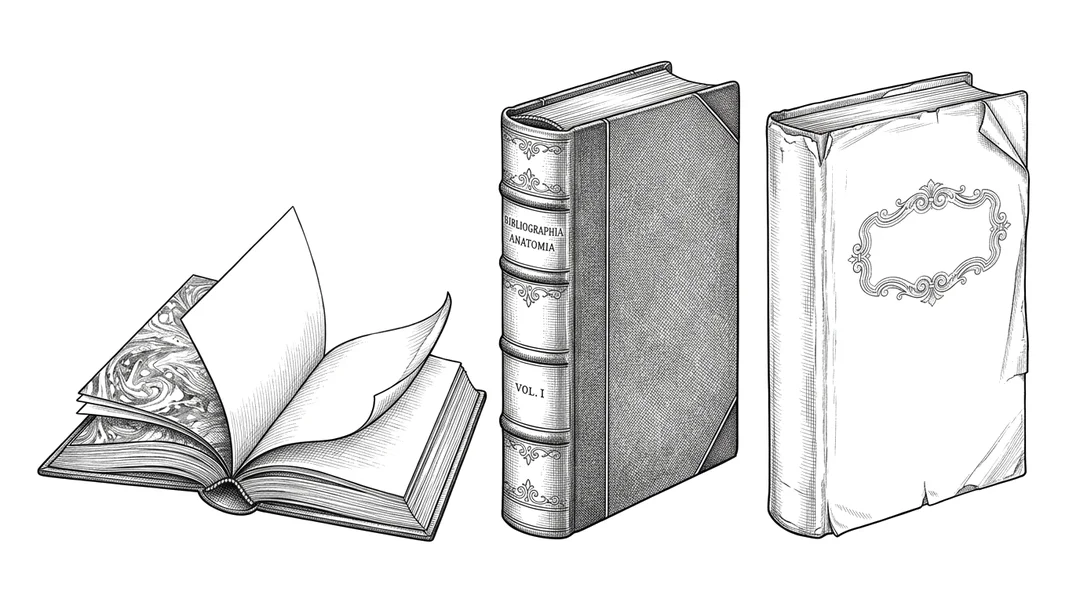
The standard antiquarian condition scale
Dealers in the Antiquarian Booksellers’ Association of America (ABAA) and the International League of Antiquarian Booksellers (ILAB) mostly work from a conservative scale that goes back to AB Bookman’s Weekly. Wording varies by dealer, so read the description too:
| Grade | Trade Meaning | Bulk Seller Reality |
|---|---|---|
| As New / Mint | Immaculate. Exactly as it left the bindery, without shelf wear, marks or opening creases. | Usually new stock, sometimes with warehouse scuffs. |
| Fine (F) | Close to As New. It’s been opened and read, but has no defects, chips, tears or writing. | Bulk sellers don’t use it. ThriftBooks, for one, runs New, Like New, Very Good, Good and Acceptable. |
| Near Fine (NF) | Nearly Fine, with one or two trivial flaws: a slightly bumped corner or a touch of shelf rub. | Bulk sellers don’t use it. |
| Very Good (VG) | The collector’s baseline. A clean, tight, used copy with small signs of wear, all of them named. | Wildly inconsistent, from near-pristine to battered paperbacks with creased spines and stickers. |
| Good (G) | Good isn’t good. The average worn used book: complete, with obvious wear, small tears, loosening hinges or soiling. | Often heavily worn, annotated or ex-library, with taped joints and barcode stickers. |
| Fair / Poor | Worn hard, text complete and legible. Fair may lack endpapers or a half-title; Poor may be soiled, stained or loose. All faults must be stated. Copies missing text fall below the scale. | Reading copies on their last legs. |
What "Near Fine" actually means (and why we took the name)
"Near Fine" is the most honest, practical grade in the book trade.
An As New copy is often still in its shrinkwrap, and priced like it. A Near Fine copy has lived in the real world: opened, read and looked after by someone who cared. It might have a tiny nick at the tail of the spine or a light touch of sun on the jacket.
It’s where plenty of serious collectors buy: a clean, handsome copy, without the premium a Fine one carries.
Independent dealers vs bulk sellers
Who’s selling matters as much as the grade:
- Independent antiquarian dealers: Grade conservatively and describe the copy in hand, flaw by flaw: "mild toning to edges, minor bumping to spine head, unclipped jacket showing 2mm closed tear at top front".
- Bulk sellers (World of Books, ThriftBooks, Better World Books): Move huge volumes, so a grade is a quick call against a house checklist. You buy a grade and get the next copy on the shelf. Great for reading copies. For a collectible first printing in its jacket, buy from a dealer whose listing describes that copy.
The collector’s defect glossary
Dealers use these words precisely. Here’s what they mean:
The pre-order inspection checklist
- Check the jacket status: For collectible 20th-century hardcovers, the dust jacket often accounts for 80% to 90% of the book’s total commercial value. A dealer’s listing that does not explicitly mention "dust jacket", "DJ" or "wrapper" is almost certainly a naked book.
- Scan for ex-library signs: Look for phrases like "ex-library", "ex-lib", "discard", "pocket on rear" or "tape ghosts". Ex-library copies are great cheap reading copies, but hold very little collectible value.
-
Evaluate two-part grades: Dealers usually grade book and jacket separately, written
VG+/VG: the book first, then the jacket. -
Set an alert for scarce copies: Only beat-up copies listed today? Search for what you want, like
first edition dust jacket, and choose Alert me. Near Fine emails you when a new listing has it, checking daily on the free plan. Alerts can’t filter by condition grade yet, so read the listing when it lands.
Ready to browse collector copies? Search 50+ booksellers across 30+ countries on Near Fine.